<img height="1" width="1" style="display:none;" alt="" src="https://px.ads.linkedin.com/collect/?pid=8405009&amp;fmt=gif">
Skip to content

Mary Elisabeth Hospital

A NEW KIND OF HOSPITAL - WHERE PLAY, CARE, AND HEALING COME TOGETHER

Rigshospitalet Copenhagen University Hospital set out to build the world's best hospital for children and families — one where play is integrated into the healing process for children, making it a central aspect of the healing architecture, treatment, rehabilitation, and everyday hospital life.

Play is widely accepted as a natural and essential part of childhood, vital for healthy growth and development, enabling children to explore and make sense of the world around them. Within a healthcare setting, access to play continues to be all of these things whilst also providing numerous additional benefits.

Extensive studies show that hospital-based play reduces stress, anxiety, and pain during medical procedures while improving understanding and emotional comfort for patients and their families. Play builds trust between patients and healthcare professionals, enables children to have a greater sense of control, and provides fun and familiar experiences that relieve boredom.

Mary Elisabeth Hospital is a new wing at Rigshospitalet Copenhagen University Hospital that brings this vision of play-based healing to life.

The Garzón School_Rosan_Bosch
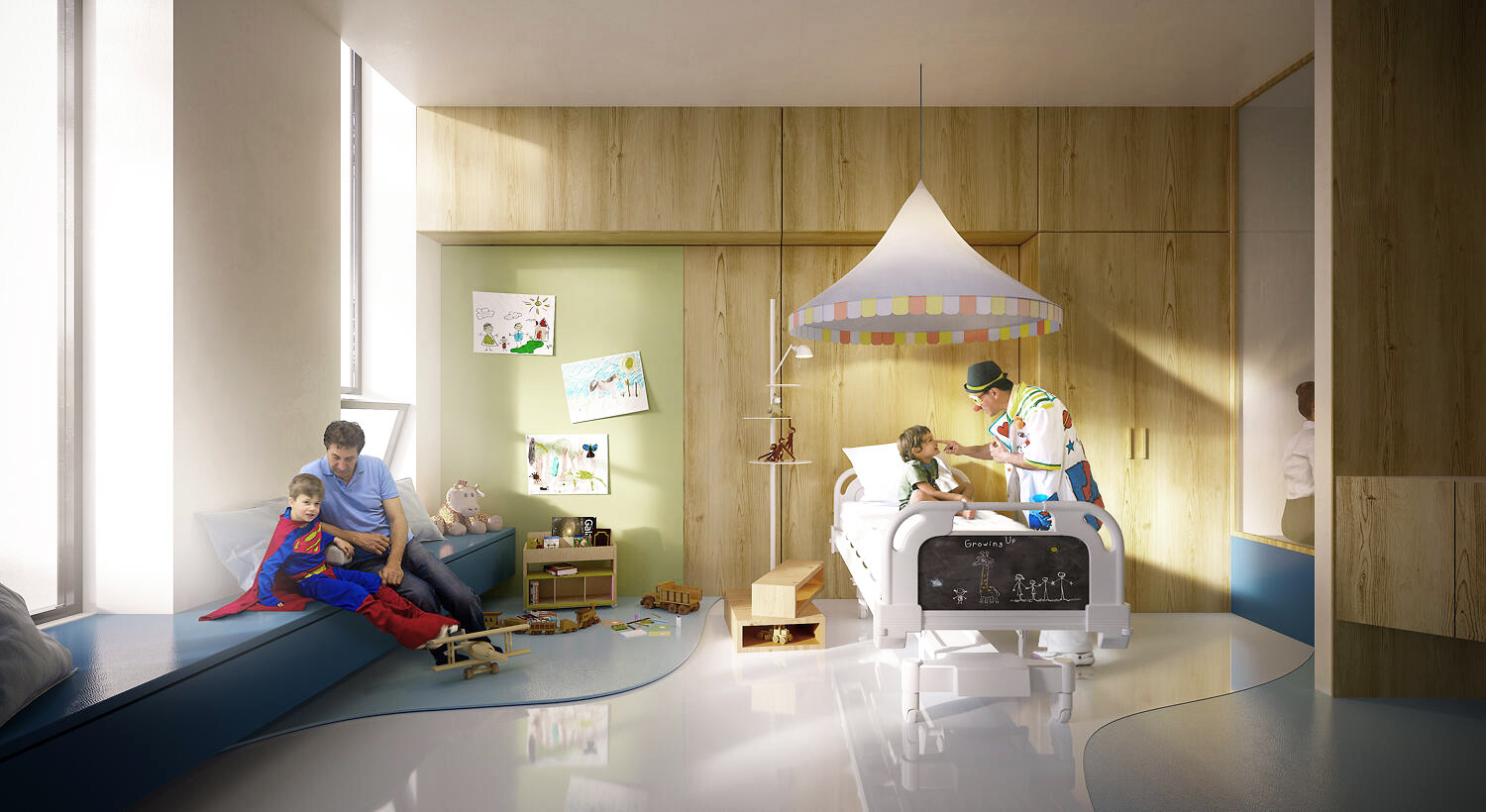
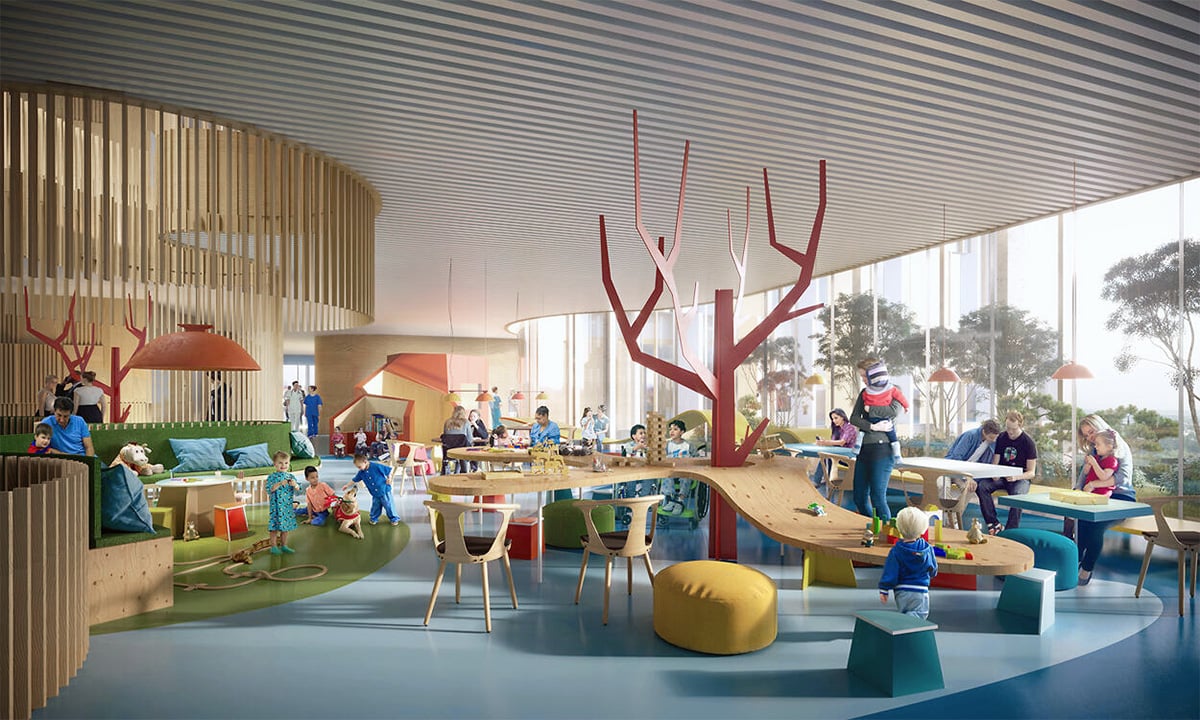
Conceptual illustrations from the winning competition proposal.
Projects
The Garzón School

Integrating play into architecture: A strategic tool

As a strategic design partner in the competition and concept phase, Rosan Bosch Studio developed a tool to secure the vision for building-integrated play and learning strategies in the new hospital wing.

The strategic tool is a matrix that incorporates children's age, medical condition, and social relationships with family and friends, providing a framework for designing a differentiated, playful hospital environment that supports opportunities for all types of play—from diversional and recreational play in common areas (e.g. winter gardens), to diagnostic play with doctors and nurses in therapy rooms, and structured play with family members in patient rooms.

THE MATRIX CONSISTS OF TWO KEY COMPONENTS

  • Spatial mapping of play opportunities across every part of the hospital — from therapy spaces to patient rooms and common areas. The matrix integrates three data sources: spatial zoning, patient data, and the healing potential of play. Play areas are programmed to reflect a diverse patient population with varying needs—from infants to adolescents, from ambulatory to bedridden patients—ensuring that every child can participate in healing play at their own level.
  • A design narrative using color, form, and materials that blurs the lines between hospital and home, transforming a potentially sterile institutional environment into a homely, stress-free experience that nurtures mental wellbeing through an unbroken patient journey.

THE RESULT

The result is a new hospital wing designed to feel homely and stress-free, with spaces for everyday family life—including playing, reading, and dining together. Rather than moving children between multiple departments, specialists come to the child, and play is interwoven throughout care routines and physical spaces, creating an uninterrupted, unified play journey customized to each patient's needs.

Projects
The Garzón School

THE PLAY JOURNEY

Play flows through every space and interaction, from playful preparation before procedures to shared activities that spark friendships among hospitalized children and outpatients, supporting families in their most joyful or difficult moments.

This physical framework contributes to better treatment outcomes. Building-integrated play conveys safety and opportunities for action—fundamental prerequisites for patients, families, and staff to choose to engage.

Conceptual illustration from the winning competition proposal.

The human-centered design unifies the children's section, creating a healthy, playful environment for children, families, and pregnant women—whether a child is being hospitalized or about to be born.

Mary Elisabeth Hospital sets a new global standard for play-based care—a hospital where healing, care, and playful experiences go hand in hand.

The winning design proposal was created in collaboration with 3XN, Arkitema Architects, Niras, and Kristine Jensens Tegnestue.

About Mary Elisabeth Hospital

Mary Elizabeth Hospital, currently under construction in Copenhagen, is a groundbreaking new facility dedicated to children, teens, and expectant families. The hospital, covering 60,000 square meters, will accommodate 179 single patient rooms, 79 outpatient rooms, and 15 operating theaters. 

The Capital Region of Denmark, Rigshospitalet Copenhagen University Hospital, and the Ole Kirk's Foundation constitute the partnership for the new hospital wing for children, young people, pregnant women, and their families.

Mary Elisabeth Hospital is expected to be completed in 2027.